Főzelék: the Hungarian vegetable dish and its story
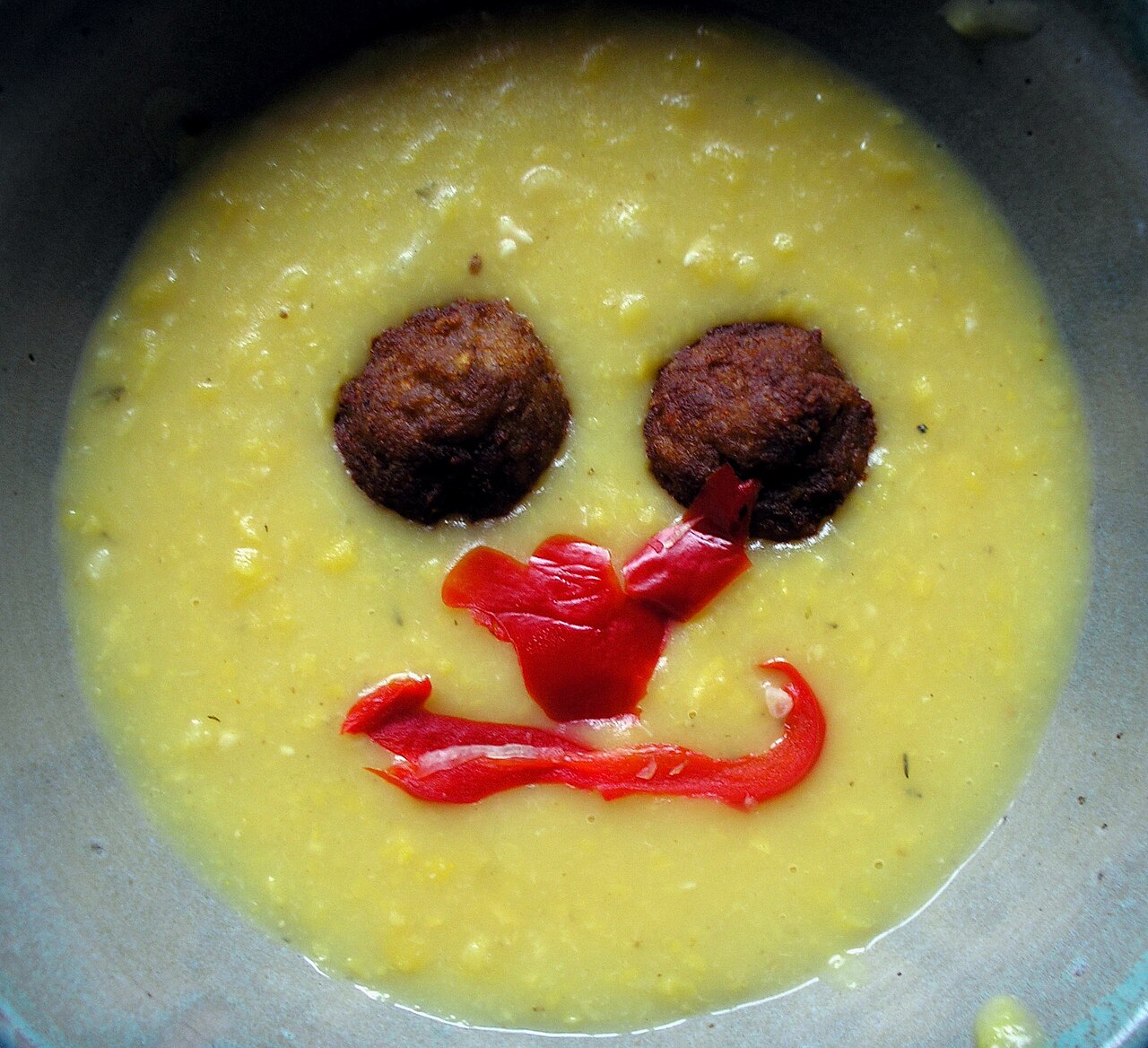
Főzelék [ˈføːzɛleːk] is a thick Hungarian vegetable dish, somewhere between a soup and a stew, made from peas, potatoes, spinach, marrow, lentils and more. In late October 2026 a főzelék dish cost about 4,200–6,900 Ft on Budapest menus, depending on the topping, and it is a regular on the weekday lunch menu.
Below: where the word comes from, why the vegetable is the main dish, and how it is thickened. Then two words for spinach, the Popeye story, the New Year lentils, and where to eat it.
A word from 1527
The word was first recorded in 1527. It comes from the verb főz, "to cook", with a suffix that turns it into a noun: főzelék is simply "something cooked".
Our guide to the weekday lunch menu explains where you will meet it most often. On a set lunch, főzelék is one of the classic mains.
The vegetable is the main dish
Főzelék is not a side dish. It comes with a topping, a feltét: a meatball, a sausage, a slice of meat stew, a fried egg or fried cheese. The topping sits on the vegetables, but in Hungarian kitchen logic the main dish is the főzelék, not the topping.
That changes how you read a menu. "Zöldborsó-főzelék sertéspörkölttel" is green pea főzelék with pork stew on top, not pork stew with peas on the side.
Almost any vegetable will do: peas, potatoes, spinach, marrow, green beans, cabbage, lentils or yellow split peas, and more rarely cauliflower or broccoli.
Roux or a flour mix
What makes a főzelék thick is the way it is finished. The vegetables are cooked in liquid and then thickened, most often in one of two ways.
- Rántás [ˈraːntaːʃ], a roux: flour cooked in fat until it loses its raw colour, then stirred in.
- Habarás: flour whisked into water or stock, or in richer versions into milk or sour cream, then stirred into the pot.
Some kitchens simply cook the vegetables down in their own liquid.
Two words for spinach
Spinach főzelék is a classic. Hungarian has two words for the vegetable. Spenót [ˈʃpɛnoːt] came through German Spinat. The other word, paraj [ˈpɒrɒj], was first recorded around 1395 and comes from Old French poree, "leek" or "leek soup".
Spinach also carries a famous myth: that it is unusually rich in iron. The usual explanation is that a 19th-century scientist misplaced a decimal point and gave spinach ten times its real iron, and that this is why Popeye ate it.
No such decimal-point error has ever been proven, and in a 1932 strip Popeye says that "spinach is full of vitamin A". Spinach is no better a source of iron than many other vegetables, and the decimal-point story is an unproven explanation of a myth.
Lentils for money
Lentils have a place of their own in the Hungarian calendar. By tradition, eating lentils at New Year brings money into the house. The round lentil is said to look like a coin.
That is a custom, not a promise.
Where to eat főzelék in Budapest
Főzelék is everyday food, so it turns up on lunch menus more often than on the à la carte menu. These partners list it in October 2026. Click a name to see the full menu with prices.
- Marischka Buda, District I: green pea főzelék with pork stew or a vegetable patty, 4,500 Ft, among the chef's recommendations.
- Market 1897 Kitchen & Wine, District IX: mushroom patties with kohlrabi főzelék, 5,500 Ft.
- Ginger & Paris Budapest, District V: a seasonal dish built on a creamy marrow főzelék with crispy chicken, 4,190 Ft.
- Király 100 Gastro Corner, District VI: veal Wiener schnitzel with potato főzelék, 6,900 Ft.
- Mandragóra, District II: a "finomfőzelék" of mixed vegetables with chicken breast on the weekday business lunch. A fixed-price menu, so no card discount.
Our guide to vegetarian and vegan Hungarian food explains how to order főzelék without meat. At DinePass partners the discount applies to à la carte food and drinks. The card's 10–30% discount applies to everyone dining with you.
Quick answers
What is főzelék?
A thick Hungarian vegetable dish between a soup and a stew, made from peas, potatoes, spinach, marrow, lentils and more, usually served with a topping.
Is főzelék a soup?
No. It is a main dish, thickened with a roux or a flour mix, and thicker than a soup.
What is a feltét?
The topping served on a főzelék, such as a meatball, sausage, meat stew, a fried egg or fried cheese. The főzelék is still the main dish.
Does spinach have a lot of iron?
No more than many other vegetables. The story of a decimal-point error behind Popeye's spinach has never been proven.
How much does főzelék cost in Budapest?
In late October 2026 a főzelék dish cost about 4,200–6,900 Ft on Budapest menus, depending on the topping.
The word origins and pronunciation from Wiktionary; the dish, its toppings and its thickening from Hungarian Wikipedia; the spinach story from McGill University's Office for Science and Society and Wikipedia; the New Year custom from Wikipedia and Hungarian press; prices from live restaurant menus. Checked on 29 October 2026.

Got a question? Ask a local
Bálint answers personally, usually within a day.
Your question is not stored on this site: it goes straight to WhatsApp or your e-mail app.
A word of Hungarian
Számla
/ˈsaːmlɒ/
Was this page useful?