Kürtőskalács: the chimney cake of the Christmas markets
Kürtőskalács /ˈkyrtøːʃkɒlaːt͡ʃ/, the chimney cake, is sweet dough wound round a spit and baked until its sugar turns to caramel. It has been an official Hungarikum since 2015, and from 13 November 2026 it is back at Budapest's two big Christmas markets.
Below: where the name comes from, a recipe from 1784 without any sugar, how the crust arrived, its cousins, and where to eat it in Budapest.
A cake named after a chimney
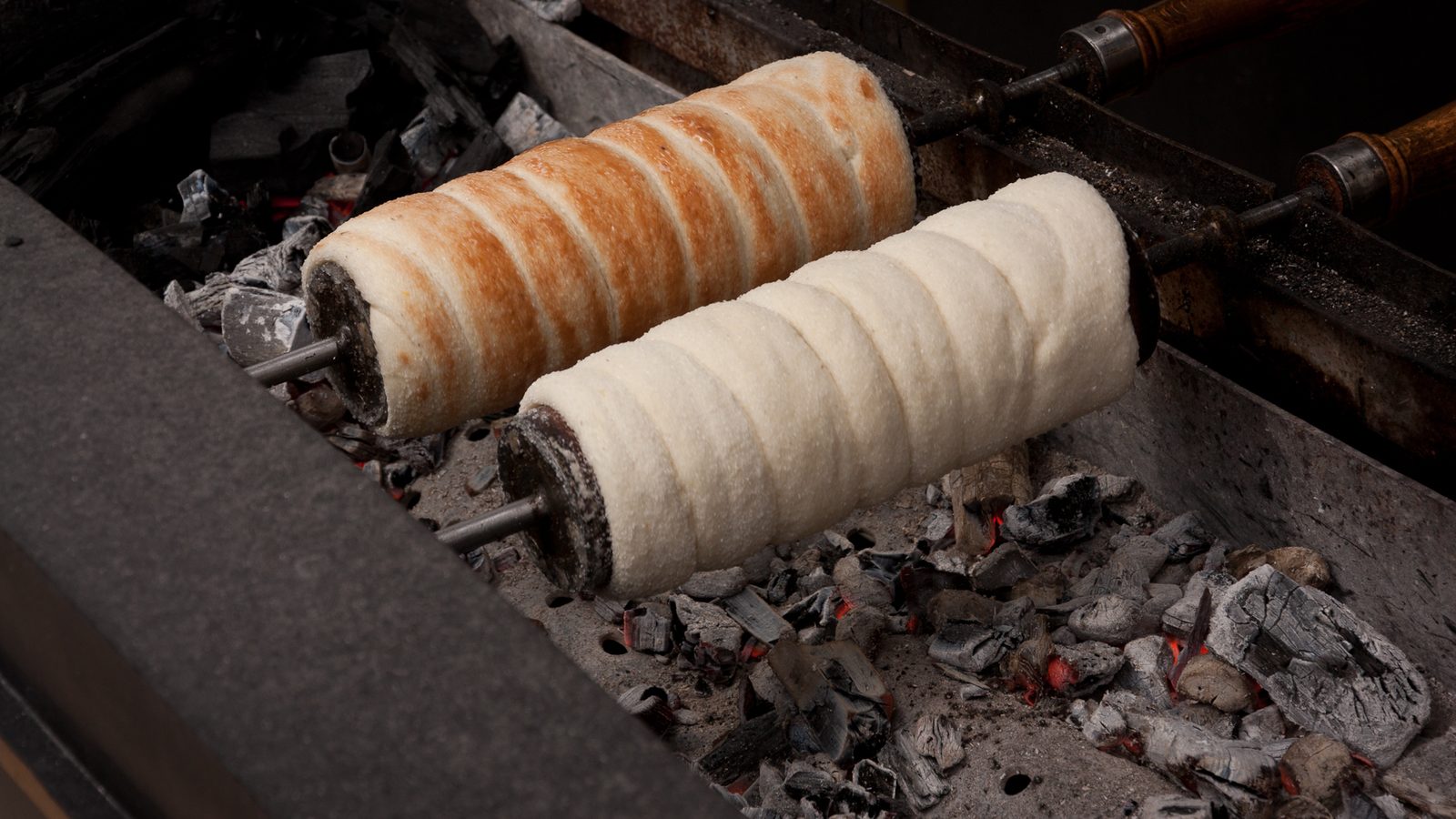
The name is a picture. Kürtő is the Hungarian word for a flue, in old usage a chimney, and kalács is a light, sweet yeast bread. The long, hollow cylinder of the cake looks like the smoke vent of a chimney.
Its home is Transylvania, today in Romania, and it is especially loved by the Hungarians and the Székely, a Hungarian-speaking people of Transylvania. It is Hungarian and Transylvanian at the same time.
From a 1450 manuscript to a recipe without sugar
Similar cakes are much older than the name. A manuscript from Heidelberg, from around 1450, already describes strips of leavened dough wound round a cylinder, brushed with egg yolk and baked.
One of the first recipes for kürtőskalács itself is in a Transylvanian cookbook written in 1784 by Countess Mária Mikes of Zabola. The handwritten recipe is headed "Poraniné módgya szerént kürtös kalács", kürtős kalács the way Mrs Poráni makes it. It calls for about five egg yolks, warm milk, a spoonful of cream, a little salt, yeast and melted butter, and no sugar at all.
By the end of the 18th century, the cake was known all over the Hungarian-speaking lands, on noble tables and in village kitchens alike. The cookbook of the Piarist monk Kristóf Simai, written in 1795, is said to be the first to mention sweetening it after baking.
How the sugar crust arrived
The crackling crust that makes it a market treat is younger than the cake. The caramel crust of crystal sugar spread in the Székely and Saxon villages at the end of the 19th century, once sugar factories had begun to work. By the early 20th century the cake was covered in sugar and flavoured with walnut. In the 19th and 20th centuries its recipe also found its way into many popular Hungarian cookbooks.
It is still made the traditional way. A long strip of dough is wound round a wooden spit, rolled in sugar and turned over the heat until the sugar caramelises. The topping comes last, for example walnut, cinnamon, cocoa or coconut.
Eat it warm. Pull the end and the cake unwinds in one sweet spiral.
Trdelník and other cousins
If you have seen a spit cake in Prague sold as trdelník, our article on Budapest's Christmas markets explains how it is related to kürtőskalács.
In Romania the cake became famous nationwide only after the fall of communism, when Székely bakers set up their own businesses and spread it across the country. In Romanian it is known as cozonac secuiesc, the Székely cake.
For more sweet Hungarian classics, see our guides to Hungarian cakes and desserts and to the Hungarikums you can taste.
Where to eat kürtőskalács in Budapest
From 13 November 2026, the Christmas markets at St Stephen's Basilica and on Vörösmarty tér sell it fresh from the spit. Prices are set stall by stall: last year the simple flavours cost less, and the filled ones a good deal more. A cup of forralt bor, the Hungarian mulled wine, goes well with it.
This DinePass partner lists kürtőskalács in October 2026. Click the name to see the full menu with prices.
- Molnár's Kürtőskalács, Váci utca 31: the classic flavours, from vanilla and cinnamon to walnut and poppy seed, 2,200 Ft; raspberry or pistachio 2,600 Ft; half a chimney cake with vanilla ice cream from 2,500 Ft.
At DinePass partners the discount covers à la carte food and drinks. The card's 10–30% discount applies to everyone dining with you.
Quick answers
What is kürtőskalács?
A Hungarian and Transylvanian sweet: yeast dough wound round a spit, rolled in sugar and baked until the sugar caramelises. In English it is called chimney cake.
Why is it called chimney cake?
Because of its long, hollow shape, which looks like the smoke vent of a chimney. Kürtő is the Hungarian word for a flue, in old usage a chimney.
Is kürtőskalács a Hungarikum?
Yes. It has been on the official Hungarikum list since 2015.
How old is kürtőskalács?
One of its first recipes is from 1784, in a Transylvanian cookbook by Countess Mária Mikes. That recipe used no sugar; the caramel crust spread only at the end of the 19th century.
Where can I eat kürtőskalács in Budapest?
At the Christmas markets from 13 November 2026, and at Molnár's Kürtőskalács on Váci utca, one of our partners. There the classic flavours cost 2,200 Ft in October 2026.
The Hungarikum entry from hungarikum.hu; the 1784 recipe from a scan of the manuscript on Wikimedia Commons; the early history from Gastro Obscura and Arta Alba; Kristóf Simai's 1795 cookbook from general reference works; pronunciation from Wiktionary; the market dates from our Christmas market article; the partner's prices from its live menu. Checked on 27 October 2026.

Got a question? Ask a local
Bálint answers personally, usually within a day.
Your question is not stored on this site: it goes straight to WhatsApp or your e-mail app.
A word of Hungarian
Jó étvágyat!
/ˈjoː ˈeːtvaːɟɒt/
Was this page useful?